
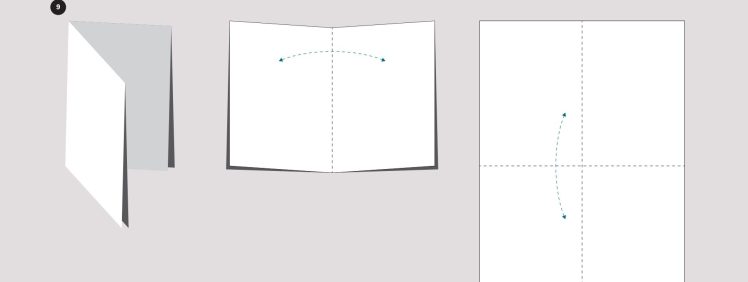
Folding is usually one of the last steps in the print process and is most commonly done as a separate process after printing is complete (note; there are exceptions where folding is done straight off the end of the printing press).
On a commercial level, folding is undertaken on a folding machine. These large industrial machines can crease, fold and counter-fold with high precision. Some folding machines also include binding capabilities—particularly saddle-stitching. Note also that some digital print systems include in-line capabilities that produce finished, bound documents directly off the end of the press. Sheet-fed offset lithographic printing presses do not have this type of capability—instead, multi-page documents are printed then folded, collated and bound.
Folding is often used to create single-sheet brochures — brochures with multiple panels of information that do not require binding. Working in this manner provides a quick, low-cost alternative to multi-page bound document formats.
When thinking about folding—paper stock is an important consideration for two reasons; grain and weight. Folding with the paper grain will yield much cleaner folds than going against the grain. Heavier stocks (200gsm+) should always be pre-scored and creased prior to folding. Following this methodology will reduce the chances of the fibres within the stock breaking and your folded edges cracking, which can look particularly unsightly.
A related issue is ink cracking. This particularly affects areas of solid colour running across a fold (such as a spine). The stock might not crack—but the ink can. Again, simply raise this concern with the printer so they are aware of your concerns, or leave the spine largely unprinted.
Single-sheet Brochures:
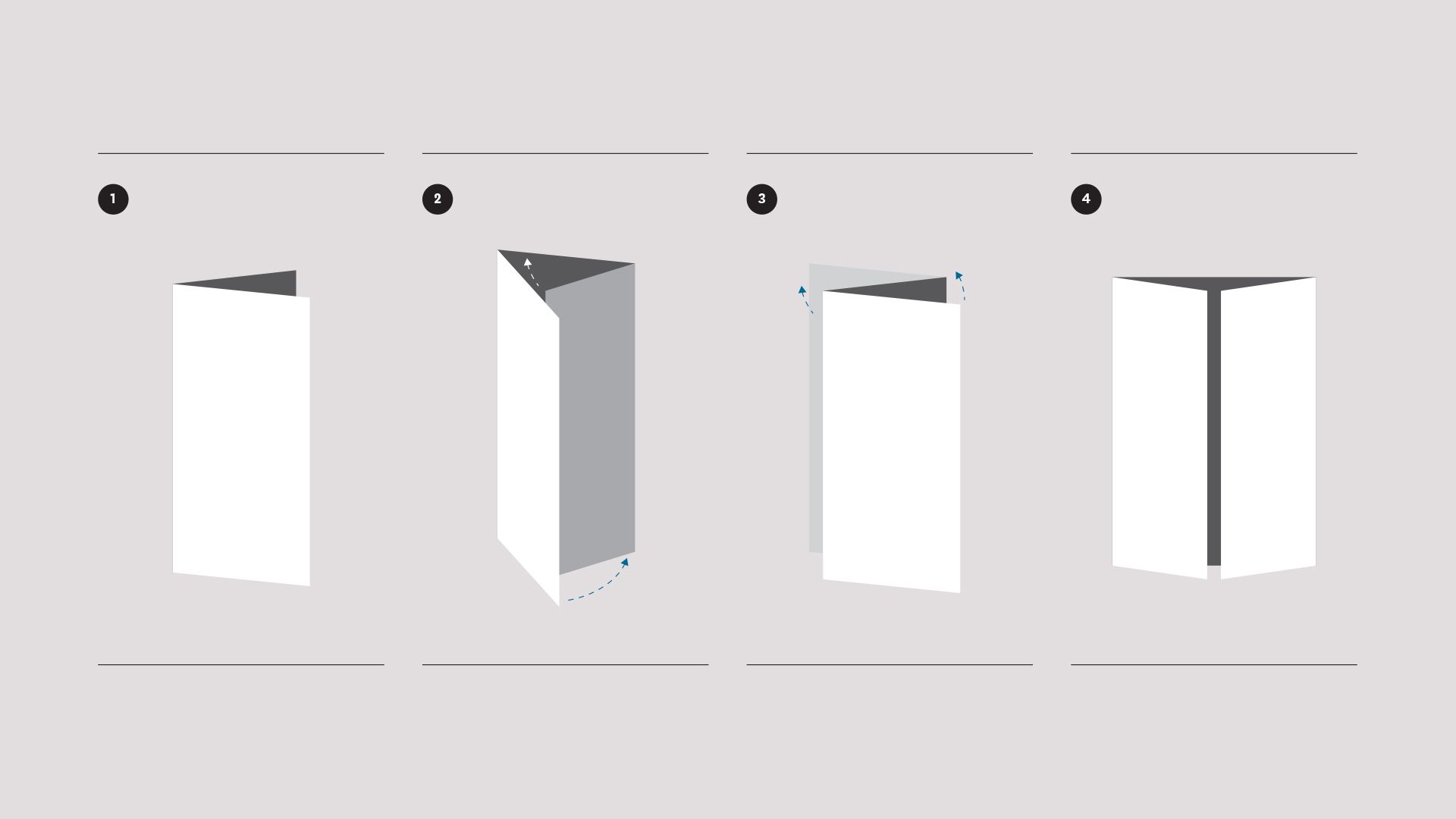 Single-sheet brochures are one way to create interesting printed communication without binding. These brochures are most commonly printed on both sides and folded (and sometimes cross-folded) to a smaller size.
The simplest single-sheet format is a Bi-fold, which is essentially a printed sheet folded in half. The result is a four page brochure with a distinct cover, internal spread and a back cover.
The example shown (1) is 200mm x 210mm folded to DL (100mm x 210mm). More complex are doublefold formats, which result in three panels of information per side.
The examples shown (2–4) use an A4 sheet folded in various ways down to DL. Each version offers a different opening sequence. Triple-fold formats are more complex again. These can be created in many different ways.
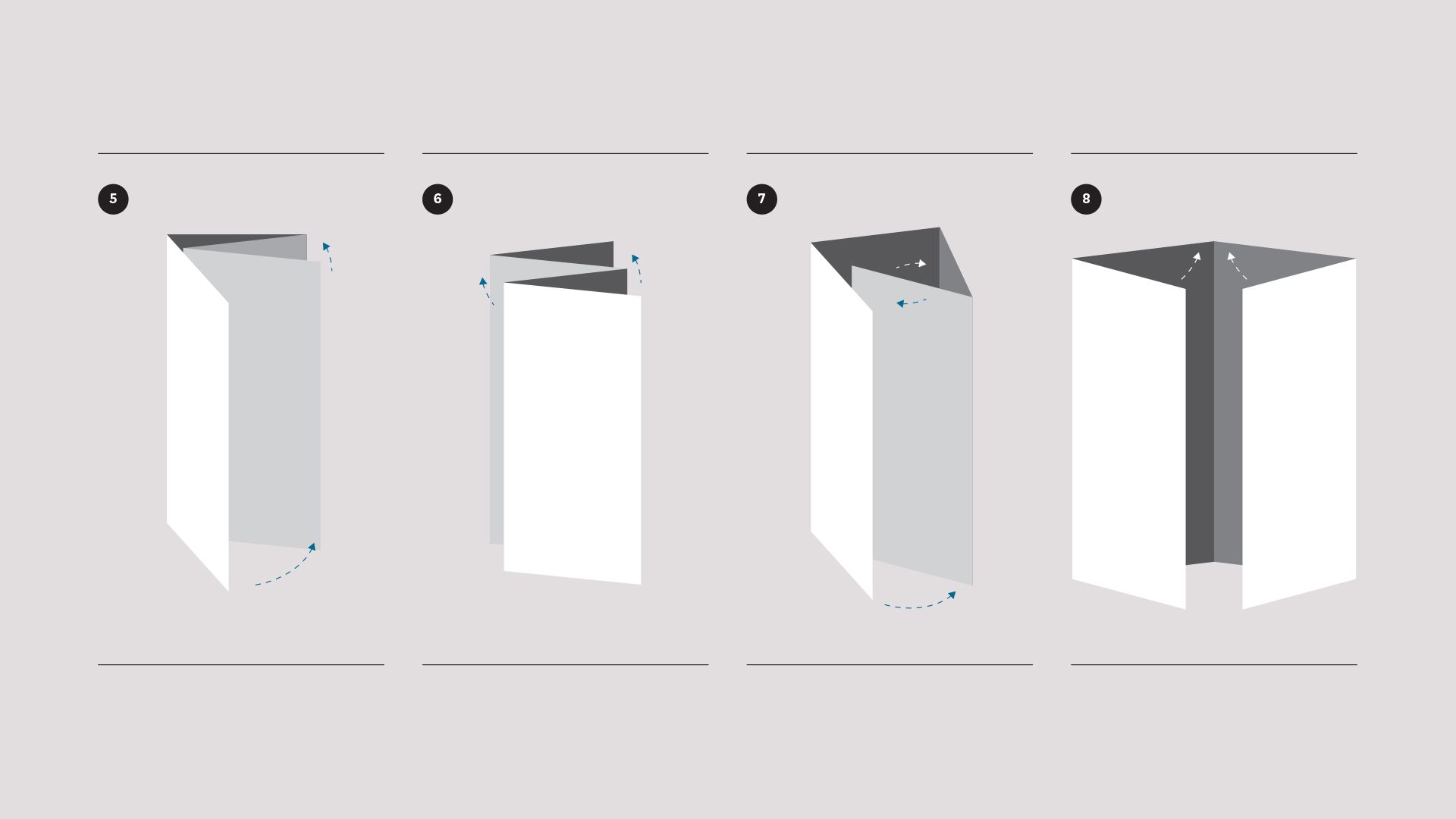
The examples (5–8) use custom sheet sizes (longer than A4) folded down to DL.
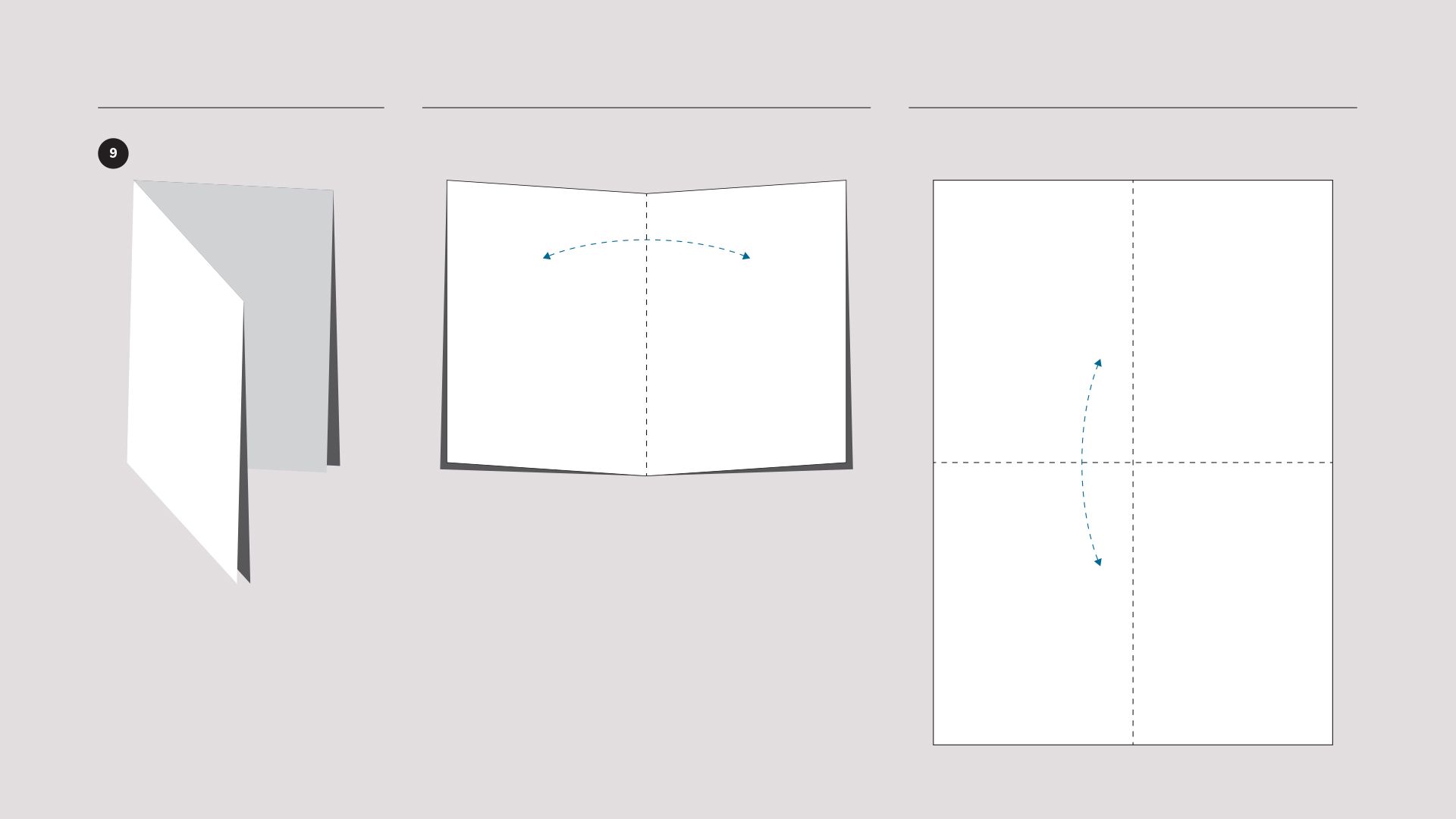 The last example (9) shows an A3 folded vertically, then cross-folded horizontally to A5, creating an eight-panel ‘booklet’. Note that with this example, when opened flat, two panels are upside-down on the cover side.
Common Single-Sheet Folding Formats:
Single-Folds:
1. Bi-Fold (also called a V-Fold)
Double-Folds:
2. Roll Fold (also called a C-Fold or Letter Fold)
3. Accordion Fold (also called a Z-Fold)
4. Gate Fold
Triple & Cross-Folds:
5. Parallel Fold
6. Accordion Fold
7. Roll Fold
8. Double Gate Fold
9. French Fold
Important note: You may notice that some examples (particularly formats that use Roll Folds) have panels that are not equal in width. This is to accommodate the brochure folding inside itself—without this allowance, the creases will pull, and the brochure will bulge
