Education – Paper, Print & Design

Case Binding – how are hard-backed books made?

case binding

At GSM, we've written a few articles on the various methods of binding. In this article we look specifically at the craft of case binding... Case binding is the method of binding ‘hardback’ books or documents. Unlike ‘softback’ binding methods, such as Perfect / PUR / Burst or saddle stitching, Case binding involves a significant amount of manual work. This extra work reflects the higher cost of this binding method. There are, however, many advantages with Case binding over the softback methods. Hardback documents can often be opened flat—which is not possible with a large Perfect / PUR or Burst...

Continue Reading →

Understanding Onscreen Colour vs Printed Colour

Working with printed colour requires not only creative flair, but also some technical knowledge about how colour is produced in print. In this article GSM takes a look at getting the most from CMYK colour. In the world of offset print, CMYK stands for Cyan, Magenta, Yellow and Key (black). It is also known as process colour. What is important to understand with offset print is the difference between onscreen colour and printed colour. There is nothing worse than seeing that the colours of a freshly printed piece don’t look anything like they did on-screen. This is not the fault...

Continue Reading →

Coloured Text – How to get it Right…

coloured print

Using coloured text in printed magazines and documents is certainly more vibrant than stock standard black text on white stock. However, it can present some potential challenges at the printing stage. In this article, GSM looks at using coloured body text in print documents and how to avoid potential pitfalls... The use of coloured text is quite likely a knock-on influence from its popularity in digital design. Using colour when designing for screens is easy, as what you see is what you get. But, in the world of offset print, the print process itself adds technical challenges that the designer...

Continue Reading →

Large Format Print – How Big is too Big?

photographic images

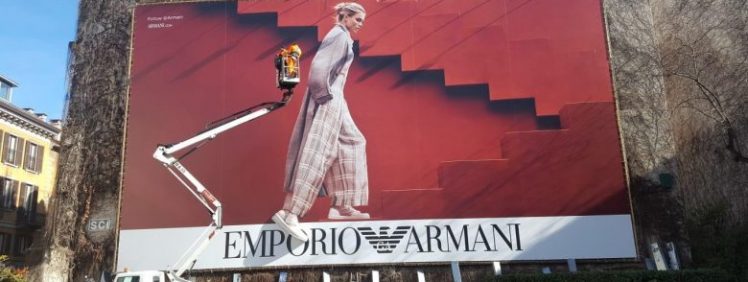
Large format print is a specialist area within the print industry which can cause inexperienced designers more than just a few headaches. The term 'large format print' (also called 'outdoor' in the advertising media world), is used to refer to types of printed material that is output at very large sizes. Think billboards, tradeshow displays, bus-back advertising and printed mural or building signage. A lot of this material is digital printed on substrates such as synthetic paper, adhesive paper, canvas, fabric and aluminium composite board (ACM). When it comes to designing for large format print—creativity aside— understanding some of the...

Continue Reading →

How to Use Pantone Spot Colours in Print…

The unexpected combination of design, colour & print finish, and choice of paper for the front cover of GSM10 created a result with a difference. Sometimes a little experimentation can create surprising results... For the cover of GSM10 we used a textured uncoated paper, BJ Ball Advocate Linen, on which we printed two spot colours - Pantone 876 (Metallic Bronze) and Pantone 804 (Neon Orange). Combining fluoros and metallics on an uncoated paper is usually a big "No No" but pushing the boundaries can create something special.. Replicating the Cover of GSM10 Advocate Linen is an uncoated textured paper from...

Continue Reading →

Offset Printing – What happens to your Artwork File?

Offset printing

Offset printing is more than a touch of a button. It takes skilled trades people, with years of experience, to transform an artwork file into a finished printed job. GSM takes a tour of Spectrum Print, in Christchurch, to see how it is done... So, what actually happens when you send an artwork file to an offset print house? We sent designer and photographer, Marty Anderson, along to Spectrum Print in Christchurch to find out. Marty shadowed a number of projects going through the printery so we could see the various stages of offset printing. The first thing that can...

Continue Reading →

Incorporating Te Ao Maori in our Creative Work…

GSM13

Ma Te Mohio Ka Marama - Through Awareness Comes Understanding For graphic designers in New Zealand, when a client requests a ‘kiwi theme’, it’s only natural to reference Te Ao Māori, the Māori world. But, what if, without realising it, we misappropriate the culture? To feel more confident about incorporating Te Ao Māori into our creative work and to better understand the cultural significance of what we do, GSM13 talks to three Māori who specialise in bringing their culture into the world of design. JOHNSON WITIHERA Johnson has a Ph.D in Māori Art & Design and is co-founder of Indigenous...

Continue Reading →

BJ Ball Swatch Books – Paper Glorious Paper!

paper selector

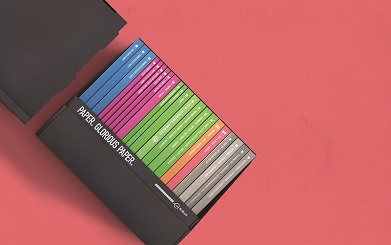
Recently, BJ Ball launched brand new swatch books to replace the older fan-apart system. No simple task when you need to accommodate and showcase more than 360 individual paper stock/weight combinations. In GSM14, we talk to Alf Walker, Creative Director at Zoo Creative, about the unique challenges and nuances of this complex project. The team at Zoo produced the original fan-apart swatches for BJ Ball back in 2014. It was an enormous project in itself, but we always felt there was room for improvement. Having the opportunity to design the BJ Ball swatch books a second time was very exciting....

Continue Reading →

Intellectual Property – What does it mean?

Intellectual Property

Intellectual property, Copyright and all that legal stuff... What does it mean to you as a graphic designer? What should you know?... As designers, we love to create. In fact, we get so engrossed with creating, we sometimes forget the importance of establishing who owns the work we create. So, who does own the work? And why should you care? GSM Re-Edit delved into the legal world of Intellectual Property... Intellectual Property Let's start with a brief overview of Intellectual Property (IP) Law as it applies in New Zealand. IP Law is covered by the Copyright Act (1994). At it’s...

Continue Reading →

Digital Print Embellishments – Look what you can create…

GSM13

Digital print technology has evolved rapidly over the last five years. To the point that you can now create embellishment effects that, previously, could only be produced with offset or letterpress. This opens a whole new world of possibilities for designers when working on short-run print projects. In GSM13, we took a look at some of the latest finishes and print effects that can be achieved using digital print systems. Specialty Toners & Varnishes Some digital print systems have the capacity to use toners beyond standard CMYK. Depending on the system, these can include other supplementary colours such as white...

Continue Reading →