
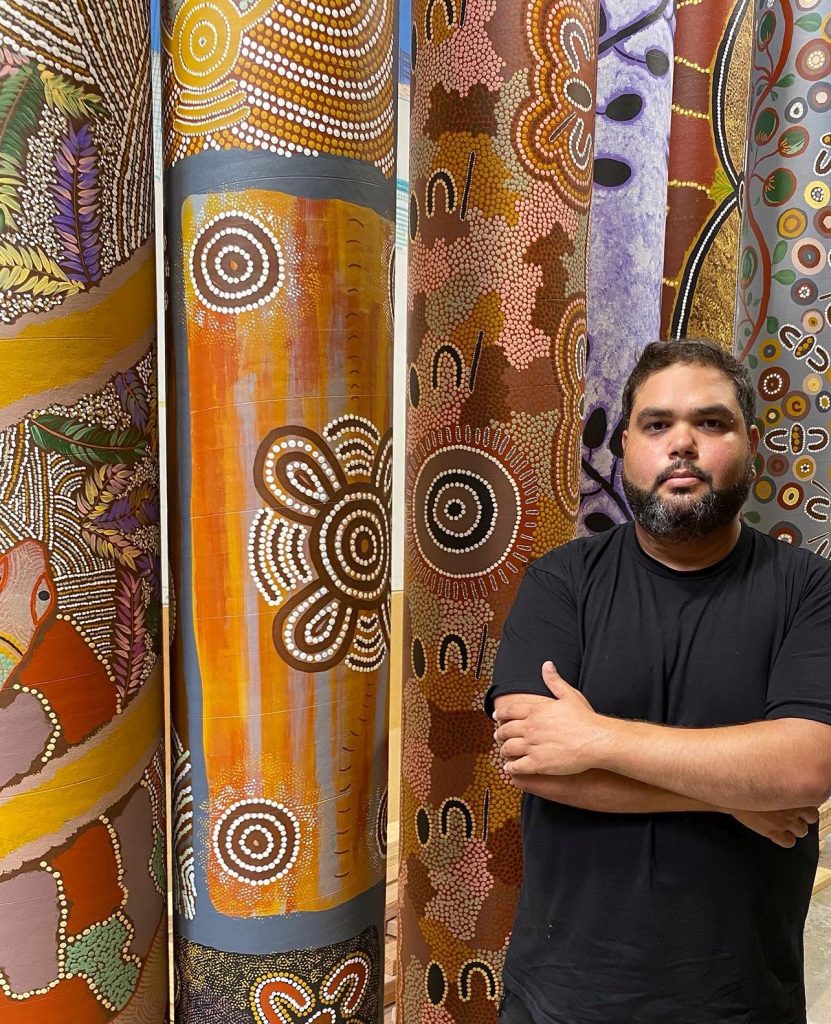
Emrhan Tjapanangka Sultan is a co-researcher and the Project Manager for Solid Lines. He has previously worked as a First Nations engagement advisor for a variety of organisations, including Orygen, Relationships Australia, The Salvation Army, Oxfam Australia, and CAAMA. He is also a dynamic artist. Emrhan belongs to the Luritja and Western Arrarnta Nations in Central Australia as well as Kokatha Nation in South Australia. In this issue of The Message Stick, GSM talks with Em about his approach to projects in the commercial world, about carrying the stories of his people.
When working as an Aboriginal artist in the commercial world, it’s important that I approach every project with respect, care, and purpose. Aboriginal culture isn’t just art. It is storytelling, knowledge, and history. There are many factors that guide me in this work, and there are also changes I’d love to see in the industry.
“Every design I create is an opportunity to teach others about my culture.”
Carrying the Stories of our People

Our designs carry the stories of our people, so it’s vital to follow cultural protocols. For me, this means staying connected to my heritage as a Western Arrarnta, Luritja, and Kokatha person. The stories I share through my work not only represent the traditions of my community, but honour those that taught me. From an early age my grandmother, mum, aunties and uncles taught me how our stories connect us to our country.
Protecting our Indigenous Cultural and Intellectual Property (ICIP) is central to this. It’s about making sure that cultural elements are not misused or exploited but treated with the care they deserve. When I create, I make sure my designs reflect our identity and the stories I’ve been given permission to paint. Using someone else’s culture or symbols without permission is not just inappropriate, it’s harmful. I avoid this in my own practice and encourage others in the industry to do the same.
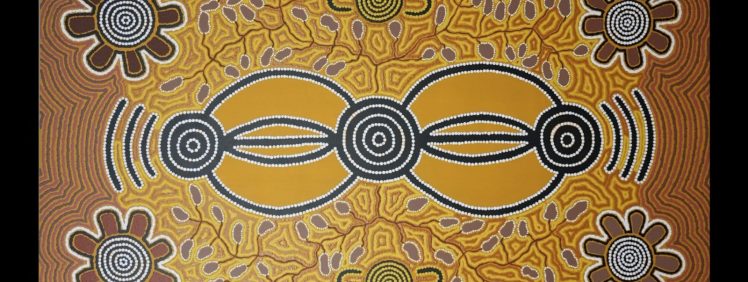
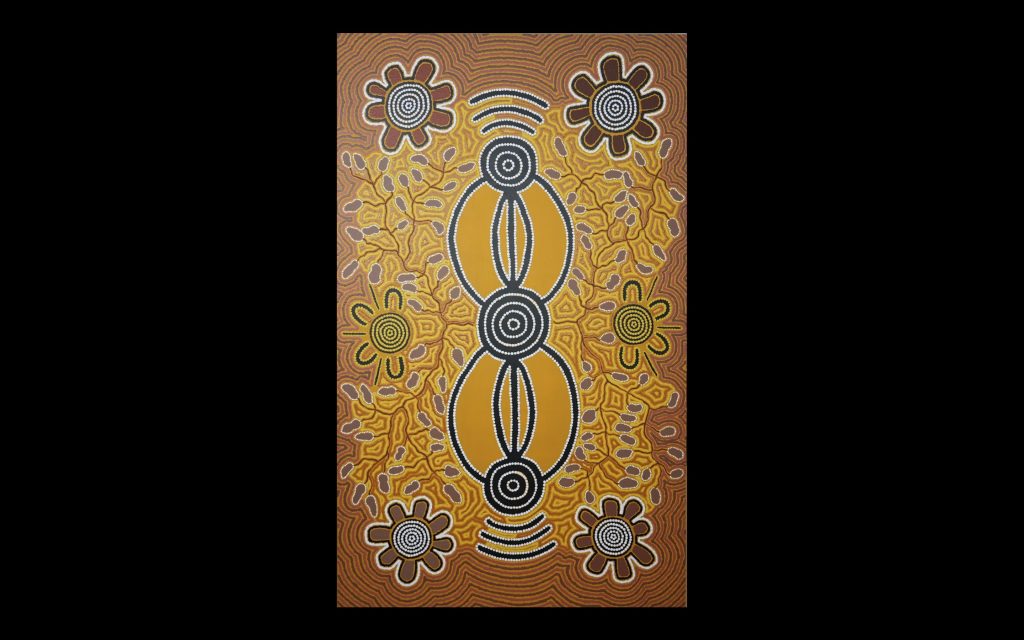
Every design I create is an opportunity to teach others about my culture and I use my platform to do this. It’s not just about creating something visually appealing, something pretty and sparkly. It’s about sharing the connection. Commercial projects offer a chance to celebrate our culture while educating broader audiences about its significance. This is what makes this work so powerful and rewarding for me.
 Challenges in the Design World
That said, there are challenges in the design world that we need to address. Cultural appropriation and tokenism are still far too common. It’s frustrating to see the use of Aboriginal designs or iconographies without proper cultural connections to the area those certain iconographies represent. This kind of behaviour not only disrespects our culture but also takes opportunities away from genuine Aboriginal artists. The industry needs to do better, even if it means having honest conversations like this, just as we do with fake Aboriginal art that is produced from overseas but labelled as “authentic”. It isn’t just a trend for us; it’s a way of life that has been practised for thousands of years.
Having a Voice
What I’d like to see is more representation of First Nations voices in the design process. And how government can support better protection rights, not only from the fake art from overseas but also what is happening right here in Australia. Aboriginal art is not a one-size-fits-all approach. Different mobs across the country have their own unique styles, stories, and ways of expressing culture, whether it be in the form of painting, rock art, wood carving, wood burning, or weaving. These diverse traditions should be acknowledged and appreciated much more, rather than treated as a single homogenous concept. First Nations artists need to be involved from the very beginning of the design process, not just brought in as an afterthought.
 This is where the work of Solid Lines, a First Nations illustration agency I co-founded, becomes so important. Solid Lines helps clients understand the importance of engaging with First Nations artists in a meaningful and respectful way. By connecting businesses with talented First Nations creators, we aim to ensure that projects honour cultural protocols and reflect the diversity of our art and stories, even as illustrators. Agencies like Solid Lines provide the expertise and relationships needed to create authentic collaborations. This is crucial for any client looking to commission First Nations artists.
First Nations art and culture have so much to offer the world, but we must share them with care and respect. By listening, learning, and working together, we can ensure we honour and value our art culture in every project. Education is key to creating meaningful change.
Solid Lines acknowledges Aboriginal and Torres Strait Islander people as traditional custodians of country and First Nations of Australia. We honour elders, past and present, whose knowledge and wisdom has ensured the continuation of culture and traditional practices. Always was, always will be.
GSM would like to thank Em for providing his thoughts to us for The Message Stick. If you would like to continue this discussion on culture please contact editor@gsmmagazine.co.nz
