GSM Blog - read more about print on paper.

Beyond Print – Folding

folding

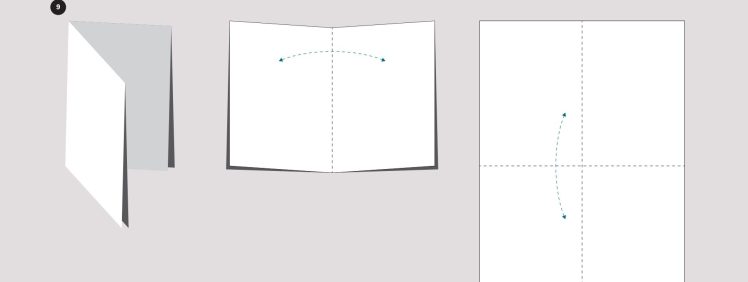
Folding is usually one of the last steps in the print process and is most commonly done as a separate process after printing is complete (note; there are exceptions where folding is done straight off the end of the printing press). On a commercial level, folding is undertaken on a folding machine. These large industrial machines can crease, fold and counter-fold with high precision. Some folding machines also include binding capabilities—particularly saddle-stitching. Note also that some digital print systems include in-line capabilities that produce finished, bound documents directly off the end of the press. Sheet-fed offset lithographic printing presses do...

Continue Reading →

Beyond Print – Die-cutting

cardboard packaging prototype

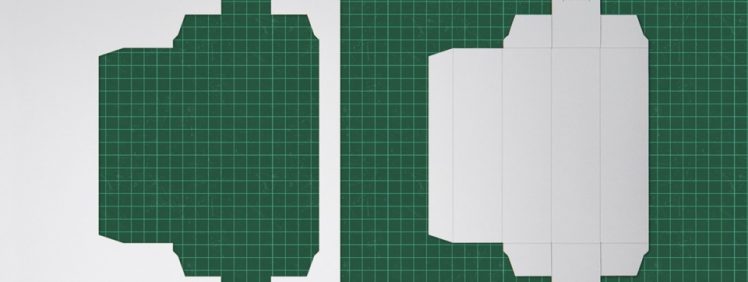
Die-cutting (sometimes referred to as ‘knifing’) is a non-print-based process of stamping a form or shape out of a substrate (usually paper or board). These can be packaging forms such as  boxes. Or they can be design elements punched out of a flat surface. For example, a shape cut out of a brochure cover. Either way, the process is the same. The Process Die-cutting is undertaken after printing, using a special stamping press. A ‘die’ or knife block, mounted on the press, hits the printed sheets cutting the form. If the project is a constructed form, such as a box,...

Continue Reading →

Beyond Print – Foiling

digital foiling

The print embellishment of Foiling is a non-ink-based process. It adheres a micro-thin metal ‘foil’ onto a sheet of paper or board. Thus creating a very different aesthetic from metallic ink or toner—with a ‘true’ metal look. There are several methods of Foiling, GSM takes a look... Hot Stamp Foil Hot Stamp Foiling is similar to embossing/debossing but only uses a single (male) block—there is no female block. The block is heated and hits the foil material onto the substrate. This heat and impact pressure fuse the foil to the substrate surface. Note that the impact leaves a very slight deboss...

Continue Reading →

Beyond Print – Embossing & Debossing

embossing

Embossing and debossing print embellishments create a raised area on paper or board. These are the same process—the only difference is the result: Either raised (emboss) or recessed (deboss). GSM takes a look… Firstly, embossing/debossing is always done after printing is complete, as a separate process. The process uses a stamp-press or Letterpress loaded with two metal die-blocks—a male (raised) and a female (recessed) block. The blocks are loaded opposing each other on the stamp-press. As sheets of paper or card feed through the press—one block hits against the other, sandwiching the stock and creating a three-dimensional impression. Typically, the...

Continue Reading →

Beyond Print – Clear Coatings

There are many processes beyond printed colour which can be used to embellish or finish a printed piece. We often do these non-print processes separately after completeing the print. The most common embellishments are a print coating, foiling, embossing and die-cutting. GSM takes a look at print coatings… Clear Print Coating Print coatings are clear finishes with the primary purpose of protecting a printed piece from smudging, scuffing and general wear and tear. However, some coatings can also be part of the overall aesthetic. Here are the most common print coatings: Acrylic Varnishes Primarily used in Offset Lithography, Flexography and Rotogravure,...

Continue Reading →

Print Processes – Letterpress Printing

letterpress

Letterpress printing is a form of relief-printing. It dates back to the 1450s, when Germanborn Johann Gutenberg famously printed 180 copies of the Bible on his new invention. Letterpress was the dominant form of mass printing for 500 years, until superseded by Offset Lithography in the 1950s. Whilst no longer viable for producing long-run quantities, Letterpress has made somewhat of a comeback in recent years as a bespoke form of short-run printing. This is largely due to it’s unique tactile, debossed, crafted look and feel. You can’t beat the luxurious aesthetic of Letterpress on quality paper for invitations, business cards...

Continue Reading →

Print Processes – Digital Printing (Dry/Wet Toner)

Digital printing

The term ‘digital printing’ is a generic name applied to processes whereby an image is printed directly from a digital source onto the media, without an intermediary process (such as pre-press or platemaking). This equates to very low initial set up costs and quick turnaround times. Consumables however, tend to be expensive—hence digital printing is generally used for short-run over long-run volumes. The two main forms of ‘digital printing’—Laser (dry and wet toner) and Inkjet— have different strengths and weaknesses. Dry & Wet Toner Printing (Laser-Printing) Commercial toner-based print systems work on the same principles as their smaller office or...

Continue Reading →

Print Processes – Other Forms of High-Volume Printing

flexographic printing

Other methods of high-volume/long-run printing are Flexography and Rotogravure. Both are similar to Offset Lithography in that they are CMYK (plus PMS Spot colour) based. The predominant difference is how the inked image transfers to the substrate. GSM takes a look... Flexography Flexographic printing (‘Flexo’) is a form of high-speed, high-volume, web-fed relief printing, meaning the image area is raised. Like offset lithography, flexography also uses printing plates. However, flexo plates are rubber or plastic and feature a raised image area. During printing, the raised area on the plate is inked and directly contacts the passing substrate. There is no...

Continue Reading →

Print Processes – Offset Lithographic Printing

offset printing

Offset Lithographic Printing Following on from the prepress stage, where the operator has transferred the artwork onto metal plates, comes the process of Offset printing.  This is where the image transfers (offset) from metal plates to rubber blankets or rollers and then onto paper. This is how the actual ‘printing’ part of the project takes placce: The Process The press operator sets up the press by loading and fixing the printing plates onto the plate cylinder, and a new rubber blanket onto the blanket cylinder. The press operator fills the ink trays (note that larger presses may run off a...

Continue Reading →

Print Processes – Prepress, Imposition & Platemaking

imposing artwork

Prepress Prepress is the first step when artwork arrives at the printery from the designer and involves the following processes:  Reviewing & Preflighting Artwork In this process a specialist Prepress operator will check the supplied artwork to ensure it has been set up correctly. It is important to note that this is a technical check—and not a content check—a printery will not spell check or proof read your artwork. The Prepress operator will be specifically looking at the following: The supplied format is correct (high resolution PDF) The artwork document trim-size is correct The artwork document includes crop marks The...

Continue Reading →