Rākau Kōrero/The Message Stick

The Message Stick – Pauly Vandenbergh of Munda Wines
Munda Wines

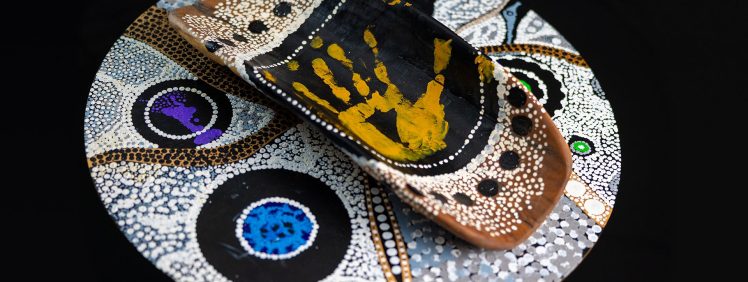
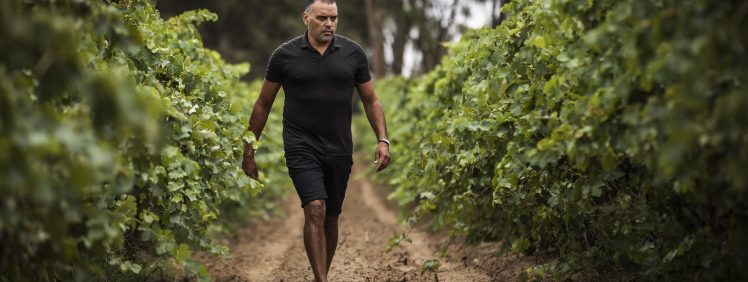
Munda is the Wirangu and Kokatha word for land - “It’s our mother, our provider. If you look after munda, it’ll look after you.” Munda Wines is an Aboriginal-owned wine company founded on deep cultural values and grounded in Country. Director and Co-Founder Pauly Vandenbergh, a proud Wirangu and Kokatha man, shares how he’s rewriting the narrative of wine in Australia — with integrity, purpose, and place at its heart.   More Than Terroir Munda is the Wirangu and Kokatha word for land — and pre-dates the French notion of terroir by over 65,000 years. “We don’t believe you can...

Continue Reading →

Rakau Korero Māori Design

maori architect

In this instalment we talk to architect Jade Kake about design from a Māori perspective, and provide some tips for positive collaborations between Māori and non-Māori. In GSM23, we featured BEST purple winning project; Rewi: Ata haerre, kia tere. A book celebrating the work of Māori architect Rewi Thompson. Following on from this, we reached out to author of the book, Jade Kake, architect and housing advocate. We asked Jade for her thoughts around design from a Māori perspective. Whilst her thoughts centre around the built-form, much of this can easily be applied to visual communication. Here’s what Jade had to offer… Kia ora...

Continue Reading →

Rākau Kōrero – RUN Aotearoa & Storytelling

RUN Aotearoa

At RUN Aotearoa, we beleive that design is storytelling - connecting people, cultures, and communities. As a Māori-owned globally award-winning agency based in Tāmaki Makaura Auckland, storytelling lies at the heart of what we do.  When we co-founded RUN, it began like many creative agencies—working across a variety of clients without a specific niche. Over time, our direction evolved, driven by both internal reflections and the needs of our clients. Today, our agency spans advertising, design, and cultural storytelling. Much of our mahi is for clients who are Māori-owned or Māori-led. Or organisations with a Māori strategy, or are wanting...

Continue Reading →

The Message Stick – Identity & Resilience

The Message Stick

What we do is not learned or taught… It's lived, it's in our blood! It's our identity! Pat Caruso, founder and director of We Create Print Deliver, is, first and foremost, an Eastern Arrernte First Nations Graphic Designer and Artist. GSM talks with Pat about his unique story in search of his bi-cultural identity. Pat’s journey to reconnect with his Eastern Arrernte roots is a powerful testament to identity and resilience. Especially when we consider how it was disrupted by his mother’s removal in the 1950s. Through his business and art, Pat has bridged his personal and community identity. He...

Continue Reading →

Navigating Bi-Cultural Design

pakeha paralysis

In this installment of Rākau Kōrero, we talk to design educator Carl Pavletich about navigating bi-cultural design from a non-Māori perspective. For Pākehā, navigating the bi-cultural design process feels uncomfortable— like floating in a proverbial waka without a hoe. When your life experience falls heavily on the Western/Pākehā side of the scales, the bi-cultural journey is dauntingly steep and disorientating. Much of what we do, we do without thinking. For example, when we master a skill, we create subconscious shortcuts. Mātauranga Māori challenges us to question our worldviews and reassess much of what we thought was true. Participating in a bi-cultural...

Continue Reading →

The Message Stick – Respectfully incorporating First Nations art & culture.

first nations

In this issue of The Message Stick, Rebecca Wessels further enlightens us on how best to incorporate First Nations art and culture into commercial work in a sympathetic and respectful manner. For tens of thousands of years, First Nations peoples commonly used message sticks as a way of communicating between different groups in Australia. For GSM, the concept of The Message Stick is that the stick will be passed from speaker to speaker to continue our discussion about First Nations culture and traditional knowledge. Our intention is for these discussions to provide some guidance and understanding of how we can...

Continue Reading →

Rākau Kōrero – Kaitiaki

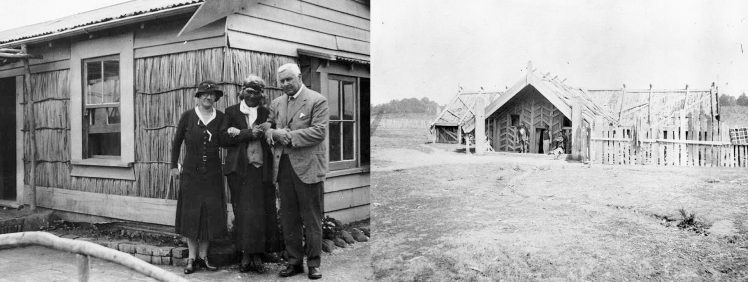
Ōtautahi Christchurch artist and designer Morgan Mathews-Hale (Ngāi Tahu, Ngāti Porou, Tainui) @ Kaitiaki Studios (Ōtautahi-Christchurch) shares her views on bicultural collaboration and working together. Ko Morgan Hale tōku ingoa. He uri tēnei nō Ngāi Tahu, nō Ngāti Porou, nō Tainui hoki. As an artist and designer, I find true joy in visual expression and storytelling, and in seeing the impact my work has on the people who interact with it. Kaitiaki Kaitiaki is the Māori concept of guardianship, representing care and consideration and adapting ourselves internally as we exist in harmony with our natural world, with others in our...

Continue Reading →

Rākau Kōrero – Mātaranga Māori

mataranga maori

GSM talks to Dr Johnson Witehira (Tamahaki, Ngāti Hinekura, Ngāpuhi, Ngāi Tū-te-Auru) about the principles of design from a traditional Mātaranga Māori perspective. Our nation is moving towards a more inclusive future, with an increasing appreciation of the uniqueness and the value of Māoritanga (Māori culture) to our country. Recently, this has extended into the teaching of visual communication. In fact, for students beginning studies in a Bachelor of Design (Visual Communication) course, there is now a requirement to understand Mātaranga Māori (traditional Māori knowledge) in relation to the Principles of Design. This is a significant step forward. In this article,...

Continue Reading →

Indigenous Design – People & Processes

idia indigenous design

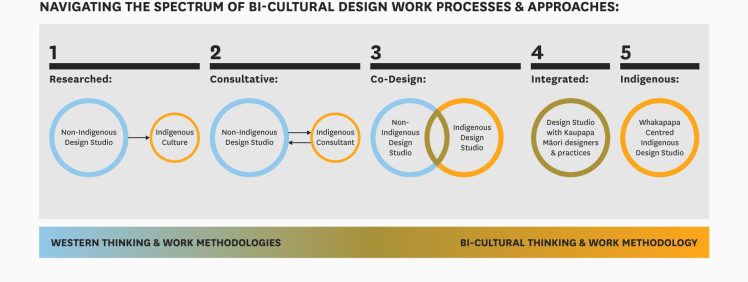
GSM talks to Dr Johnson Witehira about Indigenous Design Methodologies - and discovers that; whilst having Māori working on 'Indigenous' work is undoubtedly a step in the right direction, having a fuller understanding of process - will result in a more meaningful output beyond simply achieving the 'right' aesthetic> Design companies throughout New Zealand are scrambling to hire Māori designers. For some, this investment is merely superficial; having a Māori designer means they can win the work they couldn’t get before. Sometimes this is to the detriment of Māori design organisations. For others, though, there seems to be a genuine...

Continue Reading →

Rākau Kōrero – Culture Appropriation or Contribution?

Appropriation of Culture

TALKING POINT: KIA ORA MAGAZINE & AIR NEW ZEALAND Following on from the first edition of Rākau Kōrero, GSM looks at how one company changes their approach to using expressions of Māori culture. — with Nā Johnson McKay @Ira Trademarking "Kia Ora" We do not need to look too far for examples that highlight issues of cultural appropriation. In 2019, Air New Zealand applied to the Intellectual Property Office of New Zealand (the government body responsible for processing Trademarks and Patents) to trademark the masthead to their inflight magazine, ‘Kia Ora’. This drew opposition from some Māori voices who viewed...

Continue Reading →